
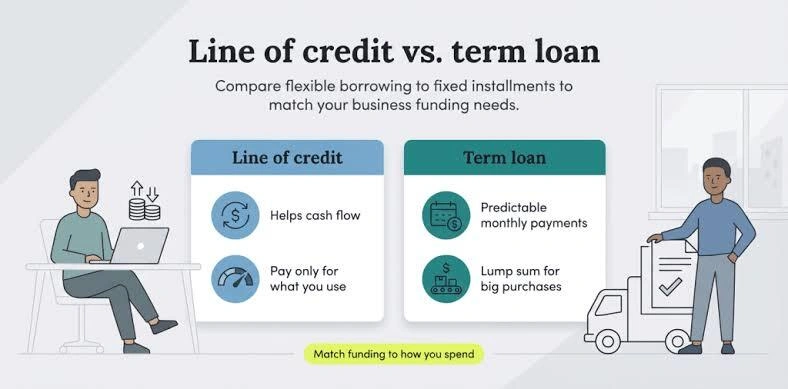
Match the product to the cash-flow pattern. Choose a term loan when you need a defined sum for a one-time purchase—equipment, a vehicle, or real estate—because fixed payments make budgeting predictable [1][2]. The SBA’s 7(a) program and microloans of $50,000 or less fit these single-purpose investments [2].
Choose a line of credit when expenses recur or fluctuate. According to Bank of America, lines suit seasonal swings, payroll gaps, and inventory restocking, since interest accrues only on what you draw [3][7]. A retailer facing a $40,000–$80,000 inventory build before a busy season benefits from drawing and repaying as sales convert.
Consider cost structure too. Chase waives its annual fee at 40% average usage, rewarding businesses that actively use the line [1]. If you expect to leave a line mostly idle, the $95–$175 Wells Fargo annual fee or Chase’s fee may outweigh the convenience [1][4]. For high-volume borrowers needing concurrent advances, American Express Business Blueprint permits multiple outstanding loans up to the approved limit [6]. Map your 12-month spending against each fee schedule before deciding.
Red Flags and Safety Advisories to Watch
Before signing, scrutinize the offer for warning signs. The Federal Trade Commission (FTC) maintains a consumer complaint database and warns that legitimate lenders do not guarantee approval or demand upfront fees before funding. Treat any “guaranteed” business line of credit pitch with skepticism and verify the lender’s record with the Better Business Bureau before sharing financial documents.
Watch the fee mechanics. Chase’s annual fee runs $200 or 0.25% of the line up to $750, and its waiver requires 40% average usage—missing that threshold reverses the savings [1]. Bank of America may require a blanket lien or a certificate of deposit to secure lines above $25,000, which can encumber business assets [3][9]. Confirm exactly what collateral you are pledging.
Variable rates are another risk. With the Prime Rate at 6.75% as of 12/11/2025, a line indexed to Prime will cost more if rates climb [4]. Model your payment at a higher rate before committing. Finally, federal guidelines and state lending rules vary by state, so review your loan agreement’s disclosure of APR, fees, and default terms in full rather than relying on a summary.